Part 6: The "Good Trans Person" Con
When Acceptance Means Submission
The Gospel According to Conversion Therapy
Meet Jesse, Sasha Ayad’s perfect trans person. Jesse accepts misgendering with a smile, treats identity as a fun metaphor, and never makes grandma uncomfortable at Thanksgiving. Jesse is the conversion therapy dream, the model minority of the gender world, the Judas who sells out an entire community for the approval of those who would rather they didn’t exist at all.
Throughout history, oppressive systems have created their ideal minorities. The “good” enslaved person who loved their master. The “model” immigrant who never complained about discrimination. The “respectable” gay who acted straight in public. Now Ayad gives us Jesse, the trans person who doesn’t actually transition, who accepts discrimination as love, who makes everyone comfortable except themselves.
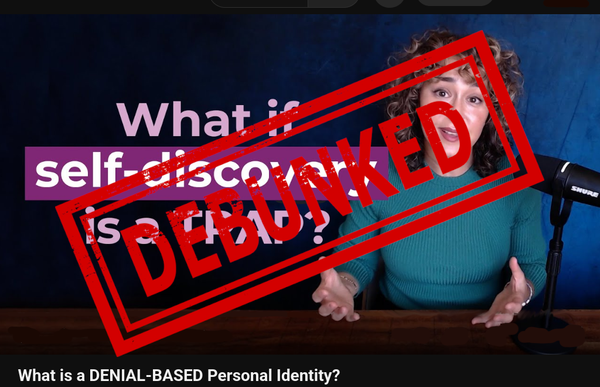
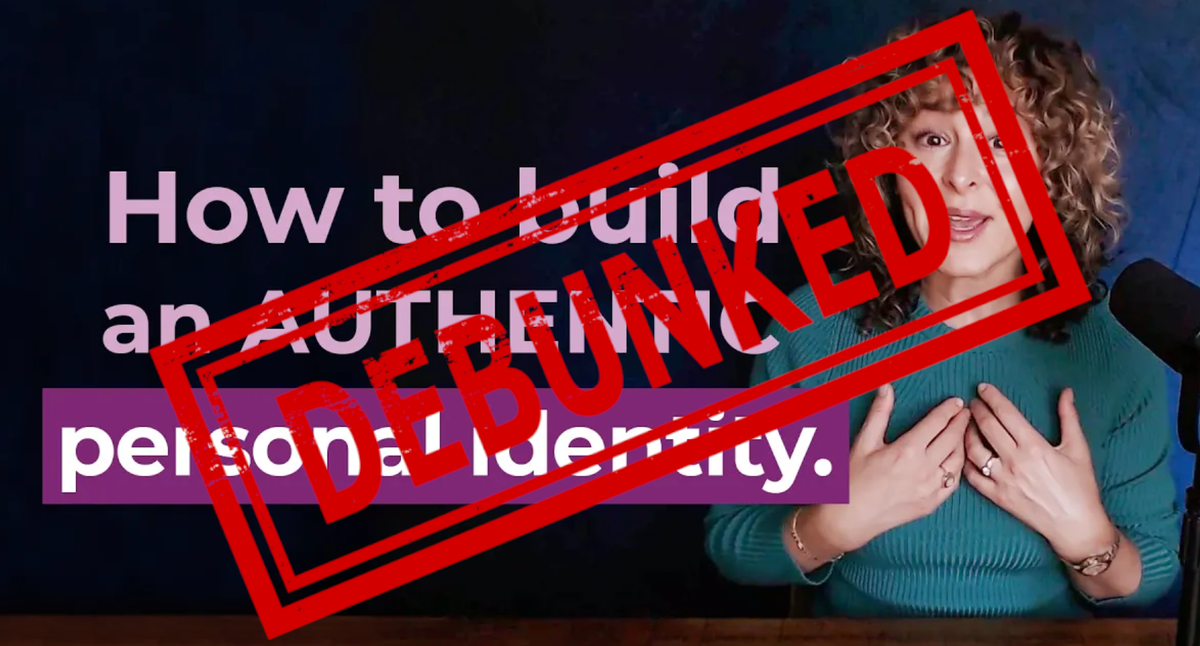
In Part 5, Ayad completed her pathologization project, framing trans identity as fundamentally “denial-based” - a psychological dysfunction rooted in refusing to accept reality. Now, in this final video, she delivers the cure: Jesse, the “acceptance-based” trans person who has learned to accept their assigned gender with philosophical grace. The conversion therapy pipeline reaches its destination.
This isn’t just another character in Ayad’s philosophical puppet show. Jesse is the destination, the goal, the promised land her entire six-video pipeline has been building toward. Every philosophical hook, every vulnerable person filtered in, every principle established, every doubt planted, every identity pathologized... it all leads here. To Jesse.
What makes Jesse particularly insidious is how reasonable they seem at first glance. Who doesn’t want family harmony? Who doesn’t value flexibility? Who doesn’t appreciate understanding different perspectives? But dig deeper and you find the poison pill wrapped in philosophical cotton candy. Jesse isn’t free. Jesse is the perfectly domesticated trans person, trained to accept their own erasure as enlightenment.
The Pipeline Delivers Its Package
Six videos. Six steps. One goal: Create Jesse.
Video 1 hooked viewers with the metaphor foundation. Gender as mere metaphor, not lived reality. This wasn’t random philosophical musing; it was laying groundwork for Jesse’s “light and symbolic” identity that never threatens the status quo.
Video 2 filtered for the vulnerable, selecting those questioning enough to be moldable, intellectual enough to be flattered, isolated enough to be desperate for answers. These weren’t casual viewers anymore; they were marks.
Video 3 established the conversion framework through seven principles that sound like wisdom but function as weapons. Each principle carefully crafted to later justify Jesse’s acceptance of discrimination as maturity.
Video 4 attacked real affirming care, painting actual support as “incomplete” and dangerous. Parents learned to doubt real therapists. Trans youth learned to doubt their own needs. The ground was prepared for Ayad’s “better” solution.
Video 5 pathologized trans identity itself as “denial-based,” setting up the false dichotomy where being trans equals psychological dysfunction while accepting your assigned gender equals health. Where we see trans identity itself as “denial-based,” creating the diagnosis for which Jesse would be the cure. Trans people were framed as psychologically dysfunctional, unable to accept reality, trapped in denial about their “true” selves. The stage was perfectly set: if being trans equals denial, then “acceptance” must mean... accepting your assigned gender. Enter Jesse.
Video 5 pathologized Where we see trans identity itself as “denial-based,” creating the diagnosis for which Jesse would be the cure. Trans people were framed as psychologically dysfunctional, unable to accept reality, trapped in denial about their “true” selves. The stage was perfectly set: if being trans equals denial, then “acceptance” must mean... accepting your assigned gender. Enter Jesse.
And now Video 6 delivers the treatment. Jesse arrives as salvation, the “acceptance-based” alternative to those poor “denial-based” souls still insisting they’re trans. See how Jesse embraces their “male physiology”? That’s acceptance! See how Jesse doesn’t need medical transition? That’s healing from denial! See how Jesse accepts misgendering? That’s the wisdom that comes from moving beyond the psychological dysfunction of actually being trans. The pipeline’s promise is fulfilled: here’s your converted child, parents. Here’s what “healthy” looks like.
See how healthy Jesse is? How happy? How loved by family? All because Jesse learned to accept... what exactly? Their assigned gender, dressed up in rainbow accessories.
🚩 Red Flag: This isn’t education. It’s a conversion pipeline with a philosophical paint job.
The brilliance of Ayad’s approach lies in its subtlety. She never says “don’t be trans.” She says be trans like Jesse. Be trans in a way that changes nothing, challenges nothing, requires nothing from anyone else. Be trans as performance art that you can take off when it makes others uncomfortable. Be trans, but don’t actually transition.
This is conversion therapy that learned from past failures. No electroshock needed. No pray-the-gay-away camps. Just six videos that lead vulnerable people to Jesse, the good trans person who chose their own cage and calls it freedom.
Meet Jesse the Gender Judas
Let’s dissect Ayad’s careful construction of her model minority, starting with the introduction at [3:55]: “Jesse is a 25-year-old non-binary graduate student who’s been exploring a fluid gender identity since the age of about 18.”
Every detail is calculated. Twenty-five years old? Old enough that parents can’t be blamed. Graduate student? Educated enough to “understand” Ayad’s philosophy, successful enough to seem stable. Started at eighteen? Conveniently adult, no messy minor consent issues. The perfect demographic for parents to point to and say, “Why can’t you be more like Jesse?”
Notice what Ayad emphasizes immediately at [4:00]: “Jesse is a biological male.” Not assigned male at birth, the respectful terminology. Biological male, the language of those who reduce human complexity to chromosomes and deny the validity of trans experience. This isn’t accidental. It’s a dog whistle to her actual audience while maintaining plausible deniability.
Then comes the masterpiece of minimization at [4:18]: Jesse embraces non-binary identity “in a light and symbolic way.” Light. Symbolic. Not real, not meaningful, not requiring any actual recognition or respect. Jesse’s identity is a costume, a phase, a philosophical exercise that never inconveniences anyone.
“Jesse doesn’t expect everyone else to hold the exact same views about identity or gender,” Ayad continues at [4:30]. Translation: Jesse accepts discrimination gracefully. Jesse doesn’t make waves. Jesse understands that their identity is just an opinion, not a fundamental aspect of self worthy of basic respect.
The construction continues at [6:16]: “Rather than trying to hide himself or pretend to literally be someone else or wishing to have a completely different body, Jesse practices compassion towards themselves.”
Unpack that toxicity. Transition is framed as “hiding” and “pretending.” The desire to align body with identity becomes “wishing to have a completely different body,” as if trans people want to be dolphins instead of simply themselves. And the alternative to transition? “Compassion,” that wonderful euphemism for accepting misery.
🚩 Red Flag: Jesse isn’t non-binary. Jesse is a cis person’s fantasy of a non-binary person who never actually challenges binary assumptions.
Most revealing is what Jesse doesn’t do. Jesse doesn’t take hormones. Jesse doesn’t get surgery. Jesse doesn’t legally change markers. Jesse doesn’t challenge discrimination. Jesse doesn’t build community with other trans people. Jesse exists in perfect isolation, dependent entirely on the conditional acceptance of those who misgender them with love.
Jesse is the good trans person who makes being trans meaningless, which is exactly the point.
The Grandparent Guilt Trip
The emotional manipulation reaches its peak with Jesse’s grandparents, introduced at [4:45] as the ultimate test of “real” love. “Jesse really loves their grandparents,” Ayad coos, setting up the false choice between identity and family that defines conversion therapy’s emotional blackmail.
“Jesse’s grandparents love him dearly,” she continues, using male pronouns to describe Jesse’s family’s perspective, “but they simply don’t hold the same views about the meaning of things like pronouns or the idea that gender could be fluid in the first place.”
Watch the sleight of hand. The grandparents’ transphobia becomes a mere difference of opinion, like preferring chocolate over vanilla. Their refusal to acknowledge Jesse’s identity transforms into philosophical disagreement rather than psychological violence. And Jesse? Jesse must be the bigger person, the understanding one, the one who accepts discrimination as the price of love.
At [5:08], Ayad reveals her master stroke: “Being able to take the perspective of others, Jesse can evaluate whether someone’s actions or words are hateful. And grandma and grandpa’s certainly are not.”
The manipulation here is breathtaking. Jesse must evaluate whether chronic misgendering is “hateful” and conclude it isn’t because... why? Because grandparents get a free pass? Because age excuses bigotry? Because family love transcends basic respect?
Research tells a different story. Family rejection remains one of the strongest predictors of negative mental health outcomes for trans people [8][10]. The choice Ayad presents, between accepting misgendering and losing family, isn’t wisdom. It’s hostage-taking. The message to parents is clear: Your love is conditional, and that’s okay. The message to trans youth: Accept whatever crumbs of recognition your family offers, or lose them entirely.
“Jesse really values love and relationships,” Ayad continues at [5:15], as if trans people who expect basic respect don’t value these things. The implication is vicious: Real love means accepting discrimination. Real relationships require you to shrink yourself. Real family bonds depend on your willingness to be erased.
But here’s what actual family acceptance looks like: Using correct names and pronouns consistently. Defending against discrimination. Supporting transition needs. Growing and learning together [2][7]. It’s not that complicated. Grandparents can learn new names when someone gets married. They can adapt to new technologies, new social norms, new realities. The idea that they’re incapable of respecting their grandchild’s identity is ageist nonsense that excuses bigotry as inevitability.
🚩 Red Flag: Love that requires you to accept discrimination isn’t love. It’s control dressed up in family photos.
The “grandparent exemption” Ayad creates here serves a specific purpose in her conversion framework. It gives parents permission to weaponize extended family against their trans children. “If you transition, it will kill grandma.” “Your grandfather fought in the war; he doesn’t understand these things.” “You’re destroying our family.”
Jesse’s solution? Complete capitulation disguised as maturity. The real message: Your identity matters less than others’ comfort. Your mental health matters less than family harmony. Your authentic self matters less than keeping the peace.
This is conditional love as psychological warfare [21][16], and Jesse is the poster child for accepting it.
The 0.05% Deception
At [5:34], Ayad drops her most audacious fabrication: “After all, pronouns only make up about 0.05% of a whole conversation. So, it’s not a huge deal.”
Stop. Read that again. She invented a statistic out of thin air and presented it as fact.
This isn’t interpretation or framing or philosophical difference. This is fabrication. Ayad provides no source, no study, no linguistic analysis, no methodology. She simply makes up a number that sounds scientific, wraps it in false precision, and uses it to minimize real harm. It’s a statistical costume thrown over dismissiveness, designed to minimize the impact of chronic misgendering through the authority of false precision.
Let’s examine the actual frequency of pronouns in English conversation. Linguistic research shows that pronouns are among the most frequently used words in any language. In English, pronouns like “I,” “you,” “he,” “she,” “they,” “it,” and “we” appear in nearly every sentence. Studies of conversational English find that pronouns constitute approximately 4-6% of all words used - that’s 80 to 120 times more frequent than Ayad’s fabricated number.
But even if we pretended Ayad’s number was real, the logic is deliberately deceptive. By this reasoning, racial slurs are fine because they’re also a tiny percentage of words. Deadnaming is acceptable because names are statistically insignificant. Sexual harassment? Maybe 0.1% of workplace interaction. Physical abuse? Could be 0.001% of a relationship’s duration. Any form of verbal discrimination becomes permissible if we just calculate its percentage of total utterance. The percentage doesn’t determine the impact. The violation determines the impact.
The research on misgendering tells a different story entirely[19][20]. It’s not about percentages; it’s about cumulative impact. Every “he” when you’re “she,” every “sir” when you’re “ma’am,” every refusal to acknowledge who you are... these aren’t isolated incidents. They’re drops of water that become a flood, individual cuts that become death by a thousand wounds.
Studies show that misgendering is associated with increased depression, anxiety, and suicidal ideation [3]. The impact isn’t proportional to frequency; it’s about what misgendering represents: a fundamental refusal to acknowledge someone’s existence. You can’t calculate dignity in percentages.
Consider what pronouns actually do in conversation. They’re not decoration; they’re recognition. Every pronoun is a small affirmation or denial of someone’s identity. When Jesse’s grandparents consistently misgender them, they’re not making a tiny 0.05% error. They’re repeatedly stating: “We don’t see you as you are. We refuse to acknowledge your truth. Our comfort matters more than your identity.”
The truth Ayad tries to hide? Pronouns matter precisely because they’re frequent[12][18].They’re the background music of social recognition, the constant acknowledgment or denial of who we are. In a single day, a trans person might hear pronouns referring to them dozens or hundreds of times. Each one either affirms their identity or denies it. Jesse accepting chronic misgendering as “not a huge deal” based on Ayad’s fabricated statistic isn’t enlightenment. It’s learned helplessness dressed up as wisdom.
🚩 Red Flag: When someone invents statistics to minimize your suffering, they’re not philosophizing. Minimizing discrimination through fake statistics is gaslighting with a calculator.
This fabrication serves multiple functions in Ayad’s framework. It gives transphobes a talking point: “It’s only 0.05% of conversation!” It makes trans people seem hysterical for caring about “something so small.” It provides parents with a rationalization for not enforcing pronoun respect: “Is it really worth fighting over something so statistically insignificant?”
But imagine applying this logic elsewhere. Physical abuse might only occupy 0.01% of a relationship’s time. A racial slur might be 0.001% of workplace conversation. The violation determines the impact, not the percentage.
What this fabrication reveals about Ayad’s entire project is damning. If she’ll invent statistics about something as easily verifiable as pronoun frequency, what else is she making up? If she’ll lie about basic linguistics to minimize trans suffering, what won’t she distort to achieve her conversion goals?
This “0.05%” lie is Ayad’s mask slipping, showing the conversion therapist beneath the philosopher’s costume. She’s not engaging in good faith philosophical discussion. She’s manufacturing “evidence” to support predetermined conclusions. The 0.05% lie isn’t a mistake or misunderstanding. It’s a deliberate deception designed to make discrimination seem negligible and resistance seem unreasonable.
When someone lies about something this basic and verifiable, they reveal their entire project as deception. The 0.05% fabrication is Ayad’s confession that truth doesn’t matter, only conversion does.
The Ashlin Appetizer
Before serving up Jesse, Ayad presents an appetizer: Ashlin, the “recovering perfectionist” who learned to accept B’s and C’s. This isn’t random. It’s careful priming, setting up the conceptual framework where accepting limitation equals mental health.
“Ashlin used to beat herself up every single time she missed a deadline,” Ayad explains at [2:10]. The before-and-after narrative is classic conversion therapy structure. Before: Ashlin suffered because she couldn’t accept her limitations. After: Ashlin found peace by lowering her expectations. The parallel Ayad wants you to draw? Before: Trans people suffer because they can’t accept their assigned gender. After: They find peace by accepting their “biological reality.”
But comparing academic perfectionism to gender dysphoria is like comparing a paper cut to a severed limb. One is about external achievement; the other is about fundamental identity. One involves arbitrary standards; the other involves basic recognition of self. The comparison isn’t just false; it’s deliberately manipulative.
Academic perfectionism is about impossible standards, about needing to be better than everyone else, about external validation through achievement. Gender dysphoria is about alignment between internal identity and external reality[1]. Trans people aren’t trying to be perfect; they’re trying to be themselves. The suffering doesn’t come from unrealistic expectations but from the mismatch between who they are and how they’re forced to exist.
When Ashlin accepts getting B’s, she’s accepting a realistic assessment of her abilities within an arbitrary grading system. When Jesse accepts their assigned gender, they’re accepting a fundamental denial of their identity. These aren’t parallel situations; they’re completely different categories of human experience.
🚩 Red Flag: Using false parallels to normalize accepting oppression as mental health.
The Ashlin story serves a specific function in Ayad’s pipeline. It primes the audience to see acceptance of limitation as universally healthy. It frames resistance to restriction as pathological perfectionism. It sets up a conceptual framework where fighting for your identity becomes unhealthy striving, where accepting discrimination becomes healthy realism.
Parents watching learn to see their trans child’s dysphoria as perfectionism rather than genuine need. “You’re just like Ashlin,” they might say, “expecting too much of the world. Learn to accept reality.” The reality being, of course, whatever makes the parents comfortable.
No Medical Transition Needed
Ayad saves her biggest revelation for last, casually mentioning at [7:25] that “we’ll even discuss how medical interventions and transition could fit into an acceptance-based personal identity.” Future tense. Hypothetical. A discussion for someday, maybe, if necessary, which Jesse demonstrates it isn’t.
Jesse doesn’t need hormones. Jesse doesn’t need surgery. Jesse found happiness through acceptance of their “male physiology” at [6:21]. The message to parents is crystal clear: Medical transition is unnecessary if you just teach your child to accept themselves properly.
This erasure of medical need isn’t subtle. Throughout six videos, Ayad never once acknowledges the reality of physical dysphoria, the documented benefits of medical transition, or the life-saving nature of gender-affirming care. Jesse’s apparent contentment without any medical intervention sends the message that transition is want, not need; preference, not medical necessity.
Research consistently shows that access to gender-affirming medical care significantly reduces depression, anxiety, and suicidality among trans people [9][5]. For many, medical transition isn’t optional; it’s essential for survival. But Jesse doesn’t need any of that. Jesse practices “compassion towards themselves” instead, which apparently cures dysphoria better than actual medical care.
The linguistic choices are telling. At [6:16], transition becomes “trying to hide himself or pretend to literally be someone else.” Hormones become “wishing to have a completely different body.” Surgery becomes denial rather than affirmation. Every medical intervention is reframed as pathological escape rather than necessary treatment.
🚩 Red Flag: Denying medical necessity through model examples is conversion therapy’s core strategy.
What Ayad carefully omits: Many non-binary people do medically transition. Many need hormones, surgery, or other interventions to align their bodies with their identities. The diversity of non-binary experience includes those who need significant medical support, not just those who can philosophically accept their assigned characteristics.
Jesse’s contentment without medical transition isn’t presented as one possible path among many. It’s presented as the enlightened path, the “acceptance-based” path, the psychologically healthy path. The implication for parents is clear: If your child wants medical transition, they haven’t reached Jesse’s level of acceptance yet. Keep working on them. Keep pushing acceptance. Keep denying medical care.
This is conversion therapy’s goal: Prevent transition through psychological manipulation rather than physical torture[17][4]. Make trans people believe that accepting their assigned gender is wisdom rather than surrender. Convince parents that denying medical care is love rather than neglect.
Jesse is the success story, the conversion therapy graduate who no longer needs conversion because they’ve internalized its messages completely.
The Model Minority Trap
Jesse perfectly embodies the transformation from Part 5’s “denial-based” trans person to Ayad’s “acceptance-based” ideal. Where the “denial-based” trans person fights for recognition, Jesse accepts invisibility. Where the “denial-based” person seeks medical transition, Jesse finds “compassion” in staying unchanged. Where the “denial-based” person expects respect, Jesse understands that pronouns are supposedly just “0.05% of conversation.” Jesse is what happens when conversion therapy succeeds so completely that its victims enforce it on themselves, calling their cage “acceptance” and their erasure “wisdom.”
Jesse embodies the model minority myth perfectly, the “good” trans person who makes everyone else comfortable while slowly suffocating in silence. At [4:45], we learn Jesse “doesn’t expect everyone else to hold the exact same views.” At [5:47], Jesse “doesn’t have to cut people off.” At [6:47], Jesse “doesn’t need others to validate or confirm” their identity. And for those who missed it, those are all projections disguised as strawmen being propped up as facts about how trans people behave and demand or expect of others.
Notice the pattern? Jesse doesn’t expect. Jesse doesn’t demand. Jesse doesn’t need. Jesse is entirely self-sufficient, requiring nothing from anyone, making no waves, causing no discomfort. Jesse is the trans person transphobes can tolerate because Jesse essentially doesn’t exist as a trans person at all.
The model minority myth has always served to divide and conquer marginalized communities [6]. Create an “ideal” minority who never complains, never demands rights, never makes the majority uncomfortable. Then use that ideal to shame everyone else. “Why can’t you be more like Jesse? Jesse doesn’t make everything about pronouns. Jesse understands that not everyone agrees with this gender stuff.”
Jesse’s flexibility isn’t presented as one way of being; it’s presented as the right way. At [5:39], we learn about Jesse’s “flexibility and understanding of social context,” as if other trans people are rigid and context-blind. The message is clear: Good trans people accommodate discrimination. Bad trans people resist it.
This model minority framework serves multiple purposes in Ayad’s conversion structure:
- It divides the trans community. Some trans people are “good” (like Jesse) while others are “bad” (those who insist on respect).
- It provides cover for discrimination. If Jesse accepts misgendering, then misgendering must be acceptable.
- It shifts responsibility to the marginalized. Trans people must be understanding of bigotry rather than bigots being expected to change.
- It isolates trans people from community. Jesse operates entirely alone, without trans community support or solidarity.
🚩 Red Flag: The model minority is a trap that exchanges authentic existence for conditional tolerance.
The isolation is particularly telling. Jesse exists in a social vacuum, navigating family and “queer friends” separately, never building the community solidarity that might support them in demanding more than crumbs of recognition. This isolation isn’t accidental; it’s essential to the model minority function. Connected communities resist oppression. Isolated individuals accept it.
Jesse makes everyone comfortable except themselves, and that’s exactly the point. The good trans person, according to Ayad, prioritizes others’ comfort and convenience over their own existence. They accept discrimination as difference of opinion. They treat their identity as negotiable. They never, ever make transphobes uncomfortable.
What’s Missing From Paradise
For all Ayad’s detail about Jesse’s philosophical enlightenment, notice what’s conspicuously absent from this portrait of happiness:
No discussion of dysphoria. Jesse apparently has none, or has philosophized it away through “acceptance.” The daily reality of body dysphoria, social dysphoria, the grinding exhaustion of existing in a body that doesn’t match your identity? Nonexistent in Jesse’s world.
No trans community. Jesse has “queer friends” mentioned in passing at [5:39], but no deep connections with other trans people who might understand their experience, share their struggles, offer support beyond philosophical platitudes. Jesse navigates their identity in perfect isolation, dependent entirely on the conditional acceptance of cis people.
No joy in transition. Jesse finds no euphoria in gender expression, no happiness in recognition, no relief in alignment. Their identity is “light and symbolic,” a burden to be managed rather than a truth to be celebrated. The profound joy many trans people experience in transition? Entirely absent.
No righteous anger. Jesse evaluates discrimination and concludes it’s not hateful. Jesse accepts misgendering as love. Jesse never experiences the healthy anger that comes from having your existence denied, the motivation that drives change, the self-respect that demands better.
No actual agency. Jesse’s “choices” all involve accepting what others impose. Accept misgendering or lose family. Accept your assigned body or be in “denial.” Accept discrimination or be unreasonable. Every “choice” is actually submission reframed as wisdom.
🚩 Red Flag: A happy ending without joy, community, or authenticity isn’t happy. It’s empty.
The happiness Ayad promises at [7:33] is revealing in its genericness. “Relationships, a sense of purpose and meaning, and habits that accumulate over time.” Nothing specific to gender, nothing about the particular joy of living authentically, nothing about the relief of transition. Jesse could be anyone accepting any form of oppression and calling it happiness.
This isn’t the rich, complex life of an actual non-binary person navigating the world. It’s a cardboard cutout designed to reassure transphobes that trans people can exist without requiring anything from them. Jesse is less a person than a permission slip for discrimination.
The Real World Jesse Would Face
Let’s inject some reality into Ayad’s fantasy. What would Jesse actually experience in the world she’s created for them?
Chronic minority stress from constant misgendering [11][22]. Every “he” from grandma isn’t a neutral pronoun; it’s a small denial of Jesse’s identity. These accumulate into what researchers call minority stress, the chronic psychological burden of existing in a world that denies your validity.
Increased risk of depression and anxiety [14]. Jesse’s philosophical acceptance doesn’t protect against the documented mental health impacts of discrimination. The cheerful flexibility Ayad describes would likely mask significant psychological distress.
Family relationships poisoned by conditional love [13]. Jesse’s grandparents’ “love” depends on Jesse accepting misgendering. This isn’t love; it’s control. The constant negotiation of identity for acceptance creates relationships built on fundamental dishonesty.
Isolation from authentic community [11]. By accepting discrimination as reasonable difference of opinion, Jesse distances themselves from trans communities that might offer real support. The model minority always stands alone.
Internalized transphobia presented as wisdom. Jesse has learned to see their own identity as less important than others’ comfort. They’ve internalized the message that their truth matters less than keeping the peace. This isn’t acceptance; it’s self-abandonment.
Research on family rejection shows devastating impacts on trans mental health [15][23]. Trans people experiencing family rejection show higher rates of suicide attempts, substance abuse, depression, and anxiety. Jesse’s philosophical acceptance doesn’t change these statistics; it just hides them under a veneer of false wisdom.
The “flexibility” Ayad praises would actually manifest as exhausting code-switching, constantly calculating which parts of themselves are safe to express in which contexts. The “understanding” she celebrates would be hypervigilance, constantly monitoring others’ comfort levels and adjusting accordingly.
🚩 Red Flag: The real-world consequences of Ayad’s model would be psychological destruction disguised as philosophical enlightenment.
Most tellingly, the Jesse that Ayad creates would be vulnerable to exactly the kind of conversion therapy she’s practicing. Without community support, without righteous anger, without the conviction that their identity deserves respect, Jesse would be the perfect target for someone like Ayad to convince them that accepting their assigned gender is the path to true happiness.
Conclusion: The Pipeline’s Destination
Six videos. Six carefully crafted steps. One destination: Jesse, the perfectly domesticated trans person who threatens nothing, demands nothing, changes nothing.
This is conversion therapy’s evolution. No need for electroshock or exorcism. Just create Jesse, the model minority who makes discrimination look like love, who makes erasure look like acceptance, who makes conversion therapy’s goal look like philosophical wisdom. Then hold Jesse up as the ideal, the goal, the “acceptance-based” alternative to actually being trans.
The pipeline is complete. Hook them with metaphors. Filter for the vulnerable. Install the framework. Attack real care. Pathologize trans identity. Then offer Jesse as salvation, the good trans person who accepted their cage and learned to call it freedom.
Parents watching learn that their trans child doesn’t need support, just philosophy. They don’t need medical care, just acceptance of “biological reality.” They don’t need respect, just 0.05% of conversation. They don’t need transition, just Jesse’s enlightened submission.
Trans youth watching learn that their dysphoria is denial, their need for recognition is pathological, their expectation of respect is unreasonable. They learn that good trans people make everyone else comfortable. They learn that love requires accepting discrimination. They learn that Jesse is who they should aspire to be.
But Jesse isn’t free. Jesse is the goal of conversion therapy: a trans person who never transitions, never challenges, never changes anything. Jesse is what happens when conversion therapy succeeds so completely that its victims enforce it on themselves.
The real tragedy is that somewhere, vulnerable trans youth are watching these videos and seeing Jesse as a solution to their pain. They’re learning to accept misgendering as love, discrimination as philosophy, erasure as enlightenment. They’re being converted not through force but through philosophical manipulation that makes their own submission seem like wisdom.
This isn’t acceptance. It’s conversion therapy with a philosophy degree. And Jesse isn’t a character; Jesse is the cage Ayad wants every trans person to build for themselves and call home.
The pipeline is complete. The conversion is accomplished. And somewhere, Sasha Ayad is planning her next video, her next vulnerable target, her next Jesse to create and call success.
🚩 THE JESSE DECEPTION:
The “Perfect” Trans Person According to Ayad:
- ❌ Accepts misgendering as love
- ❌ Never medically transitions
- ❌ Makes transphobes comfortable
- ❌ Treats identity as “light and symbolic”
- ❌ Never challenges discrimination
- ❌ Prioritizes others’ comfort over self
This isn’t acceptance. It’s erasure with extra steps.
Jesse isn’t free. Jesse is the goal of conversion therapy.
[1]: [The phenomenology of gender dysphoria in adults: A systematic review ...](https://pmc.ncbi.nlm.nih.gov/articles/PMC7441311/) 15%
[2]: [Family-Based Interventions with Transgender and Gender Expansive Youth ...](https://pmc.ncbi.nlm.nih.gov/articles/PMC9829155/) 7%
[3]: [Associations between misgendering, invalidation, pride, community ...](https://pubmed.ncbi.nlm.nih.gov/39250277/) 7%
[4]: [An assessment of the evidence on conversion therapy for... - GOV.UK](https://www.gov.uk/government/publications/an-assessment-of-the-evidence-on-conversion-therapy-for-sexual-orientation-and-gender-identity/an-assessment-of-the-evidence-on-conversion-therapy-for-sexual-orientation-and-gender-identity) 6%
[5]: [A patient-centered model of mental health care for trauma and minority ...](https://pmc.ncbi.nlm.nih.gov/articles/PMC11100088/) 6%
[6]: [Examination of the “model minority” stereotype through ethnicity and ...](https://pmc.ncbi.nlm.nih.gov/articles/PMC10524967/) 6%
[7]: [LGBT Youth and Family Acceptance - PMC](https://pmc.ncbi.nlm.nih.gov/articles/PMC5127283/) 5%
[8]: [Family Rejection During COVID-19: Effects on Sexual and Gender ...](https://pmc.ncbi.nlm.nih.gov/articles/PMC10162589/) 5%
[9]: [Minority stress and the influence of transgender identity and race ...](https://pmc.ncbi.nlm.nih.gov/articles/PMC8986215/) 5%
[10]: [The Impact of Family Rejection on LGBTQ+ Mental Health and ...](https://www.outcarehealth.org/the-impact-of-family-rejection-on-lgbtq-mental-health-and-substance-use/) 4%
[11]: [Suicidal ideation in transgender people: Gender minority stress and...](https://pubmed.ncbi.nlm.nih.gov/27831708/) 4%
[12]: [Patient and clinician perspectives on misgendering in healthcare](https://pubmed.ncbi.nlm.nih.gov/40484628/) 4%
[13]: [What if parental love is conditional …? Children’s self-esteem ...](https://pmc.ncbi.nlm.nih.gov/articles/PMC10563255/) 4%
[14]: [Prevalence and Determinants of Depressive and Anxiety Symptoms among ...](https://pmc.ncbi.nlm.nih.gov/articles/PMC10000997/) 3%
[15]: [Predictors and Mental Health Benefits of Chosen Name Use among...](https://pmc.ncbi.nlm.nih.gov/articles/PMC7678041/) 3%
[16]: [The Negative Effects of Conditional Love - Psychology Today](https://www.psychologytoday.com/sg/blog/invisible-bruises/202310/the-negative-effects-of-conditional-love) 2%
[17]: [Conversion therapy: an evidence assessment and qualitative study](https://www.gov.uk/government/publications/conversion-therapy-an-evidence-assessment-and-qualitative-study/conversion-therapy-an-evidence-assessment-and-qualitative-study) 2%
[18]: [The experience of misgendering among transgender and gender ...](https://pubmed.ncbi.nlm.nih.gov/40773327/) 2%
[19]: [Understanding the Impact and How to Create Inclusive Environments](https://www.gendergp.com/misgendering-understanding-the-impact-and-how-to-create-inclusive-environments/) 2%
[20]: [Misgendering and the health and wellbeing of nonbinary people in ...](https://pmc.ncbi.nlm.nih.gov/articles/PMC11500516/) 2%
[21]: [The Lasting Harm of Conditional Parental Love - Psychology Today](https://www.psychologytoday.com/us/blog/invisible-bruises/202310/the-lasting-harm-of-conditional-parental-love) 2%
[22]: [Expecting Rejection: Understanding the Minority Stress Experiences...](https://pubmed.ncbi.nlm.nih.gov/29159306/) 2%
[23]: [(PDF) Family Rejection, Self-Esteem and Mental Health of...](https://www.researchgate.net/publication/386111785_Family_Rejection_Self-Esteem_and_Mental_Health_of_Transgender_Individuals) 2%