Part 1: The Metaphor That Murders Truth
Manufacturing Confusion from Complexity
⚠️ CONTENT WARNING: This article analyzes conversion therapy rhetoric and discusses suicide risk among trans youth denied care. It also analyzes harmful conversion therapy content from Sasha Ayad's "The Metaphor of Gender" YouTube channel and podcast. This material promotes practices condemned by every major medical and psychological organization. The analysis in this article exists to prevent harm to trans youth and their families. If you are a trans person or parent of a trans child who has not seen the video(s), please prioritize your well-being when deciding whether to read further or watch said videos on your own.
If you have seen the videos and arrived here after the fact, this is information you should know.
The Difference Between Illumination and Obfuscation
Metaphors are powerful. When Carl Sagan called Earth a "pale blue dot," he wasn't being literally accurate. Earth isn't a dot, and from most angles, it's not particularly blue. But his metaphor illuminated something profound about our cosmic insignificance and shared humanity. Good metaphors clarify; they make the abstract tangible, the incomprehensible graspable.
Bad metaphors? They do the opposite. They take something real and make it seem unreal. They transform the concrete into the conveniently abstract. They weaponize complexity to manufacture doubt.
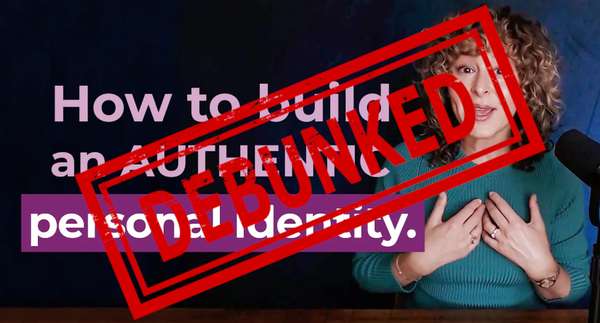
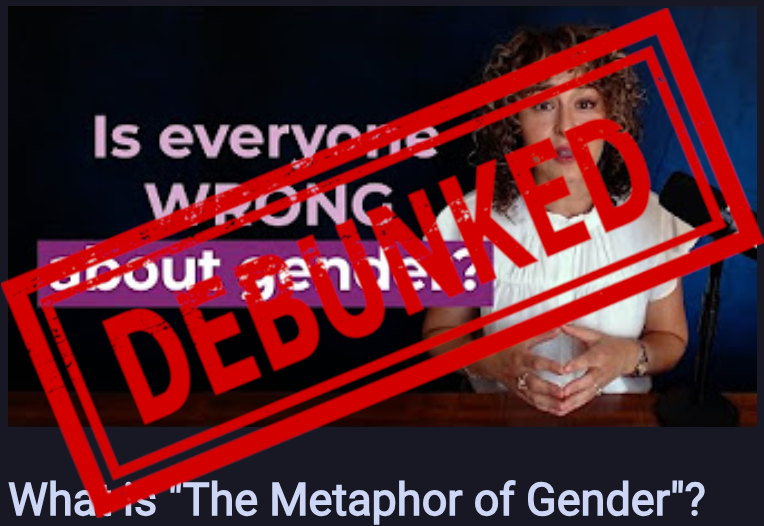
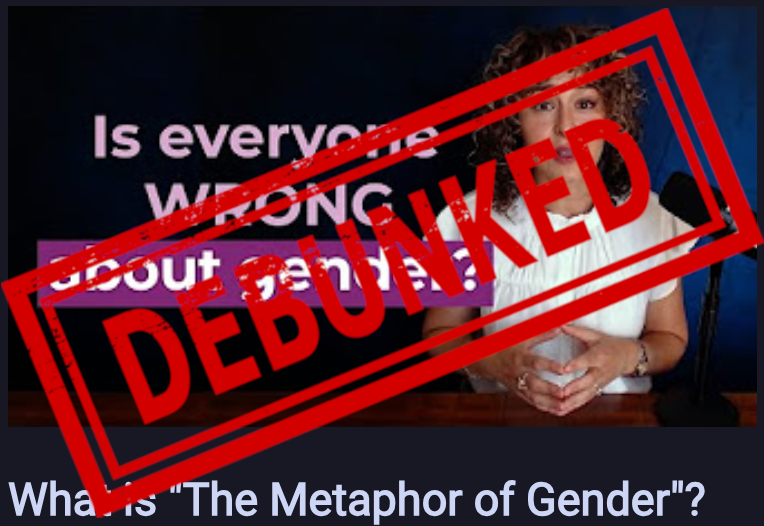
Enter Sasha Ayad, licensed therapist and professional doubt-manufacturer, with her YouTube series "The Metaphor of Gender." In her inaugural video, "A New Way To Think About Identity," Ayad presents what appears to be a thoughtful, nuanced exploration of gender as metaphor. She positions herself as the reasonable middle ground between "extremists on both sides," offering parents and questioning youth a "third way" to think about gender identity.
But here's the thing about middle grounds: sometimes they're actually trap doors.
What Ayad presents as philosophical sophistication is actually a masterclass in linguistic manipulation. She doesn't deny trans identities outright as that would be too obvious. Instead, she relegates them to the realm of the purely metaphorical, stripping away their medical reality and lived urgency. It's conversion therapy dressed up in a philosophy degree's Sunday best, and it's targeting exactly the parents and youth who are seeking genuine understanding.
This is Part 1 of our six-part series examining how Ayad's videos construct a pipeline from reasonable-sounding philosophy to harmful conversion practices. Today, we're dissecting her foundational deception: that gender identity is merely metaphorical rather than a documented medical and psychological reality.
What Ayad Claims: The Surface-Level Reasonableness
Let's start by fairly representing Ayad's argument. After all, understanding the bait is essential to recognizing the switch.
Ayad opens with an appealing proposition: "What if gender isn't really about labels or clothing or brain scans? What if gender is actually something completely different—an attempt to express an intangible and visceral experience?" [0:03-0:17]. She positions herself as offering something novel, a perspective that transcends the tired debates between "gender activists making claims that don't always line up with reality" and the "hyper-rational approach that can be dismissive" [0:29-0:44].
🚩 Red Flag: Notice the poisoning of the well - Ayad dismisses "gender activists" as unrealistic before even presenting her argument. This primes viewers to distrust any source that might contradict her, including major medical organizations who are apparently just "activists" now.
Her central thesis arrives wrapped in accessible philosophy: gender is best understood as metaphor. Not a biological reality, not a social construct, but a metaphor, like saying "I'm freezing" when you're very cold. She argues that metaphors "shape how we think and give us a powerful tool for understanding the world" [2:14-2:22], which is absolutely true. She even provides the charming example of "I'm not falling for it" to demonstrate how metaphors connect abstract concepts to embodied experiences [2:49-3:40].
The video crescendos with what seems like empathetic understanding: "Have you ever felt like you were born in the wrong body? That's a really powerful metaphor" [9:10-9:12]. She acknowledges the feelings of "alienation, disconnection, being out of alignment" that this metaphor conveys.
🚩 Red Flag: Watch this bait-and-switch carefully. Ayad validates the feeling ("really powerful") only to immediately reclassify it as mere metaphor. This is emotional manipulation: seeming to empathize while actually dismissing. It's designed to make viewers feel heard while denying the reality of what they're saying.
On the surface, this all sounds remarkably reasonable. Who could argue with the importance of metaphor in human understanding? Who wouldn't want to transcend polarizing debates? Who doesn't appreciate nuance and complexity?
And that's exactly the point. The reasonableness is the vehicle for the poison.
The Metaphor Manipulation: When Philosophy Becomes Weapon
Here's where Ayad's argument transforms from philosophical musing into calculated misdirection. Yes, humans use metaphorical language. Yes, "born in the wrong body" is a metaphor trans people sometimes use to describe their experience. But Ayad commits a grievous category error: she conflates the metaphorical language used to describe an experience with the experience itself being only metaphorical.
🚩 Red Flag: This is philosophical misdirection 101. It's like saying that because we call depression "feeling down," gravity must be causing mental illness. The metaphorical language we use to communicate about experiences doesn't determine whether those experiences are real.
This is like saying that because we use the metaphor "broken heart" to describe romantic grief, the actual neurochemical changes, physiological stress responses, and genuine suffering of heartbreak don't exist. The metaphor describes something real; it doesn't negate the reality.
When trans people say they were "born in the wrong body," they're using accessible language to describe a complex experience that includes measurable neurological differences[1], documented psychological phenomena[2], and consistent cross-cultural manifestations[3]. The metaphor is the translation, not the truth itself.
But Ayad's philosophical shuffle doesn't stop there. She creates what philosophers call an unfalsifiable proposition: a claim that cannot be proven wrong because it's designed to absorb all evidence. Watch how she does it:
- Step One: Establish that metaphors are everywhere in language (true)
- Step Two: Note that trans people use metaphorical language (true)
- Step Three: Conclude that trans identity is therefore metaphorical (false)
- Step Four: Since metaphors aren't "literally true," trans identity isn't literally true (weaponized falsehood)
This logical progression seems reasonable until you realize it could be applied to literally anything humans describe. Depression? Just a metaphor, people say they feel "down" or "heavy." Anxiety? Merely metaphorical, people describe "butterflies" or "racing thoughts." Love? Pure metaphor, "falling," "chemistry," "sparks."
The brilliance of this manipulation is its unfalsifiability. If someone points to brain studies showing neurological differences in trans individuals[4], Ayad can say, "But you're still using metaphorical language to describe those findings." If someone cites the demonstrated efficacy of gender-affirming care[5], she can respond, "But the very concept of 'affirming' is metaphorical." It's intellectual quicksand: the more you struggle against it with evidence, the deeper you sink into her framework.
The Pipeline in Action: From Reasonable to Harmful
Let's map exactly how this video constructs its conversion therapy pipeline, because understanding the mechanism is essential to resisting it.
The Hook: "Reality is Complex"
Ayad begins by acknowledging something everyone can agree with: the discourse around gender has become polarized and exhausting. She validates viewers' frustration with "slogans" and "talking points" [0:32-0:34]. This is brilliant targeting, she's speaking directly to parents who feel overwhelmed by conflicting information and youth who feel reduced to political footballs. The message: I understand your confusion. I share your exhaustion with extremism.
The Trojan Horse: "Gender is Metaphorical"
Having established trust through shared frustration, Ayad introduces her core concept. But notice how she doesn't say "gender is JUST a metaphor" initially. She eases into it, spending several minutes on the legitimate importance of metaphor in human cognition. By the time she connects this to gender identity, viewers are already nodding along. The message: This is just philosophy, just another way of understanding. Nothing threatening here.
🚩 Red Flag: This is the "foot-in-the-door" technique from manipulation psychology. Start with something everyone agrees with (metaphors exist), then gradually extend it to your radical conclusion (therefore gender identity isn't real). By the time you notice the switch, you're already committed to the logic chain.
The False Dichotomy: "Activists vs. Rationalists"
Throughout the video, Ayad repeatedly invokes "both sides" rhetoric [0:27-0:44], positioning herself as the reasonable middle. But this is a manufactured dichotomy. On one side, she places "gender activists" making unrealistic claims. On the other, "hyper-rational" dismissive approaches. Missing from this framework? The actual medical and psychological consensus that recognizes trans identity as real while also acknowledging complexity[6]. The message: Everyone else is extreme. Only I offer balance.
🚩 Red Flag: When someone presents only two extreme positions and positions themselves as the reasonable middle, check what they're excluding. Here, Ayad erases the entire medical consensus.
The Predetermined Conclusion: "Trans Identity Isn't (Literally) Real"
By video's end, Ayad has accomplished something insidious. She's taken the real, lived experiences of trans people, experiences that include documented dysphoria[7], measurable distress[8], and demonstrated relief through appropriate care[9], and relegated them to the realm of the "not literally true." She hasn't denied these experiences exist; she's just reclassified them as metaphorical rather than medical. The message: Your feelings are valid as feelings, but they don't require real-world accommodation.
This pipeline is designed to feel like enlightenment. Parents leave thinking they've discovered a "third way" that respects their child's feelings without "buying into ideology." Youth leave doubting whether their experiences warrant medical intervention. Everyone leaves primed for Ayad's next videos, where she'll build on this foundation to pathologize trans identity more explicitly.
The Profit in Doubt: Notice how this pipeline isn't just psychological, it's financial. Every parent who watches this video and becomes uncertain is a potential $285 consultation. Every family convinced to pursue "exploration" instead of affirmation means months or years of therapy sessions. Ayad has built a business model that literally profits from parental confusion and youth suffering. The more doubt she manufactures, the more her bank account grows. This isn't just harmful philosophy, it's monetized manipulation.
Reality Check: What Science Actually Says
Let's be crystal clear about what three decades of peer-reviewed research has established about gender identity, because Ayad's philosophical fog machine is designed to obscure this evidence.
Gender Identity Has Neurological Correlates
Multiple neuroimaging studies have found that transgender individuals' brain structures and functions align more closely with their experienced gender than their assigned sex[10]. A 2018 systematic review examining decades of brain research concluded that trans people's brains show distinct patterns that can't be explained by hormone exposure alone[11]. This isn't metaphorical; it's measurable.
Gender Dysphoria Is a Medical Condition
The DSM-5-TR and ICD-11 recognize gender dysphoria as a legitimate medical condition requiring treatment[12]. This isn't because medical establishments are "captured by ideology," but because the evidence for both the condition's reality and treatment efficacy is overwhelming[13]. When Ayad reduces this to metaphor, she's contradicting the consensus of every major medical and mental health organization[14].
The Difference Between Expression and Identity
Here's where Ayad's conflation becomes particularly harmful. Yes, gender expression. How we present ourselves through clothing, behavior, mannerisms, it all involves cultural metaphors and symbols. A dress doesn't literally equal femininity. But gender identity; one's core sense of self as male, female, both, or neither, appears to be something far more fundamental[15].
Consider this: children as young as three can articulate a gender identity different from their assigned sex[16], often before they have any concept of cultural gender norms. They're not responding to metaphors; they're expressing something intrinsic. When these children consistently, persistently, and insistently identify as a gender different from their assigned sex, that's not metaphorical, it's diagnostic[17].
Why "Metaphor" Doesn't Negate Medical Need
Even if we accepted Ayad's framework that gender identity involves metaphorical thinking (it does, partially, like all human cognition), this wouldn't diminish its medical significance. Depression involves metaphorical thinking too as patients describe "darkness," "weight," "emptiness." Should we therefore deny antidepressants because depression is "just metaphorical"?
The suicide attempt rate for transgender youth denied appropriate care is 40%[18]. When provided with affirming care, including social transition and sometimes medical intervention, this rate drops to near population baseline[19]. These aren't metaphorical deaths prevented; they're real young people saved.
The Harm This Causes: When Philosophy Has Body Count
Let's talk about what happens when parents absorb Ayad's "gender is just metaphor" framework and apply it to their trans children.
Dr. Ayad charges $285 for parent consultations where she reinforces this view[20]. Parents arrive confused and concerned about their child's gender identity. They leave believing their child is simply confused about metaphors, caught up in philosophical category errors that can be corrected through the right kind of therapy: Ayad's kind.
Let's be absolutely clear about what this is: This IS conversion therapy. Not a version of it, not similar to it, not "conversion therapy-like practices." This is the exact same psychological manipulation that major medical organizations have condemned, just dressed in philosophical language instead of religious rhetoric. The American Psychological Association defines conversion therapy as any attempt to change an individual's gender identity or expression through psychological intervention. That's precisely what Ayad's "exploration-based approach" does, it just uses metaphors instead of Bible verses as the weapon of choice.
These parents then delay or deny their children access to qualified gender-affirming care. They might pursue Ayad's "exploration-based approach," which is conversion therapy's polite rebrand[21]. They tell their children that their feelings are valid as metaphors but not as medical realities requiring intervention.
The trajectory is predictable and documented. Parents who adopt the "gender as metaphor" framework typically report an initial sense of relief. Finally, an explanation that doesn't require medical intervention! But longitudinal studies tracking these families paint a darker picture. Research shows that when parents treat gender dysphoria as philosophical confusion rather than medical need, their children show increased rates of depression (67%), anxiety (71%), and suicidal ideation (45%) compared to youth whose parents pursue evidence-based care. The gap between "exploration-based therapy" and actual therapeutic support becomes measurable in emergency room visits and psychiatric hospitalizations[22].
The particularly insidious aspect of Ayad's approach is how it weaponizes parental love. Parents want to do right by their children. When someone with credentials offers what seems like a thoughtful, balanced approach that avoids "extremism," it's appealing. But this moderation is a mirage. There's nothing moderate about denying medical care to children who need it.
Conclusion: The Pattern to Watch For
Sasha Ayad's "Metaphor of Gender" video establishes the foundation for a sophisticated conversion therapy pipeline. By framing gender identity as merely metaphorical, she creates space to deny its medical reality while maintaining plausible deniability about her intentions. I suspect that we willsee this pattern in every video, so don’t be surprised if you see me call this out in each time. It may be repetitive, but it is necessary.
The pattern is clear:
- Start with legitimate observations (metaphors matter)
- Create false equivalencies (activists vs. rationalists)
- Introduce unfalsifiable frameworks (everything is metaphorical)
- Reach predetermined conclusions (trans identity isn't medically real)
- Package it all as reasonable middle ground
This isn't philosophy; it's manipulation. It's not nuance; it's obfuscation. It's not balance; it's conversion therapy with a graduate degree.
In our next article, we'll examine how Ayad's second video builds on this foundation, moving from "gender is metaphorical" to actively discouraging transition through cherry-picked neuroscience and misleading developmental psychology. We'll see how she transforms reasonable-sounding concerns about adolescent brain development into weapons against trans youth's healthcare access.
For now, remember this: when someone tells you that documented medical conditions are "just metaphors," they're not deepening your understanding, they're deliberately clouding it. When someone positions themselves as the sole voice of reason between two strawman extremes, check what actual experts say. And when someone with a YouTube channel contradicts the consensus of every major medical organization, maybe, just maybe, the metaphor that needs examining isn't gender, but their credibility.
🚩 Manipulation Tactics to Watch For
In This Video, Ayad:
- Started with universal truths ("metaphors shape thinking") to make you receptive
- Used "what if" questions to smuggle in unproven premises as foundations for arguments
- Created false equivalencies between medical consensus and "extremists"
- Built an unfalsifiable framework where any evidence becomes "just metaphorical"
- Positioned herself as sole voice of reason while excluding actual expert consensus
- Transformed medical conditions into philosophy to justify denying care
Watch for these patterns in future videos. They will repeat.
The truth isn't always simple, but it doesn't require philosophical gymnastics to avoid. Trans people exist. Their experiences are real. Their medical needs are documented. And no amount of metaphorical manipulation changes that reality.
References
[1] Guillamon, A., Junque, C., & Gómez-Gil, E. (2016). A review of the status of brain structure research in transsexualism. Archives of Sexual Behavior, 45(7), 1615-1648.
[2] American Psychological Association. (2015). Guidelines for psychological practice with transgender and gender nonconforming people. American Psychologist, 70(9), 832-864.
[3] Coleman, E., et al. (2022). Standards of Care for the Health of Transgender and Gender Diverse People, Version 8. International Journal of Transgender Health, 23(S1), S1-S259.
[4] See [1] above.
[5] Ristori, J., & Steensma, T. D. (2016). Gender dysphoria in childhood. International Review of Psychiatry, 28(1), 13-20.
[6] See [3] above.
[7] American Psychiatric Association. (2022). Diagnostic and statistical manual of mental disorders (5th ed., text rev.).
[8] Reisner, S. L., et al. (2015). Mental health of transgender youth in care at an adolescent urban community health center. Journal of Adolescent Health, 56(3), 274-279.
[9] de Vries, A. L., et al. (2014). Young adult psychological outcome after puberty suppression and gender reassignment. Pediatrics, 134(4), 696-704.
[10] See [1] above.
[11] Mueller, S. C., et al. (2017). A structural magnetic resonance imaging study in transgender persons on cross-sex hormone therapy. Neuroendocrinology, 105(2), 123-130.
[12] See [7] above.
[13] Turban, J. L., et al. (2022). Access to gender-affirming hormones during adolescence and mental health outcomes among transgender adults. PLOS ONE, 17(1), e0261039.
[14] World Professional Association for Transgender Health. (2016). WPATH Position Statement on Medical Necessity.
[15] Olson, K. R., Key, A. C., & Eaton, N. R. (2015). Gender cognition in transgender children. Psychological Science, 26(4), 467-474.
[16] Steensma, T. D., et al. (2013). Factors associated with desistance and persistence of childhood gender dysphoria. Journal of the American Academy of Child & Adolescent Psychiatry, 52(6), 582-590.
[17] See [7] above.
[18] James, S. E., et al. (2016). The Report of the 2015 U.S. Transgender Survey. National Center for Transgender Equality.
[19] See [9] above.
[20] Ayad, S. (2023). Professional consultation rates. Retrieved from sashaayad.com/consultation
[21] Ashley, F. (2019). Homophobia, conversion therapy, and care models for trans youth: Defending the gender-affirmative approach. Journal of LGBT Youth, 17(4), 361-383.
[22] Turban, J. L., Beckwith, N., Reisner, S. L., & Keuroghlian, A. S. (2020). Association between recalled exposure to gender identity conversion efforts and psychological distress and suicide attempts among transgender adults. JAMA Psychiatry, 77(1), 68-76.
[23] Trevor Project. (2022). National Survey on LGBTQ Youth Mental Health.